Member Log in

*


Children's Services


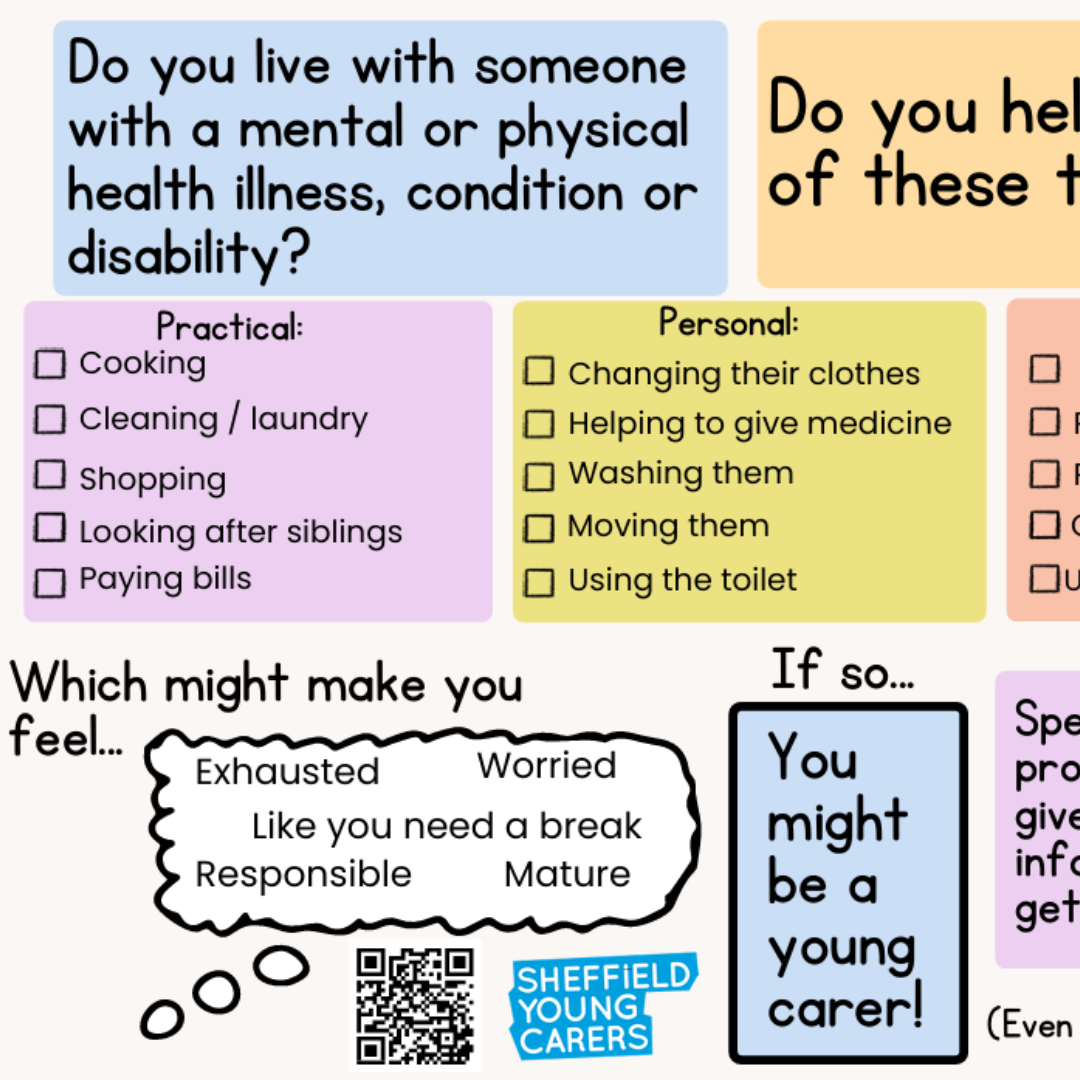
Children’s services are usually well placed to indentify, support and refer young carers to SYC and other appropriate organisations/agencies. However, sometimes this is not easy as many young carers actively try to conceal their caring role for fear of outside interference in their families, fear of being taken into care or a perceived loyalty to their families. It is also worth remembering that most young people undertaking a caring role do not identify themselves as young carers.

How to identify and help a young carer

Recognising some of these key signs may help you to identify young carers within children you work with:

  • Late for and miss days of school or social activities (such as a youth club) for no apparent reason
  • Tired and withdrawn
  • Difficulty joining into social and extra-curricular activities
  • Isolated or a victim of bullying....but in contrast they may be confident with adults
  • Under-achievement in school or socially
  • Secretive and protective of their home life
  • Anxiety or concern for a relative and a need to be in constant contact with someone at home
  • Behavioural problems, expressing pent up frustration or stress
  • Physical problems such as strain or injury caused by aspects of their caring role

Positive steps that you can take to help:

  • Approach them in an age appropriate and sensitive way – don’t assume that even those who outwardly appear mature and confident feel the same on the inside.
  • Talk to them about how they feel – whilst young carers spend most of their time looking after someone at home, they may be the person who knows least about the health condition of the cared for person.
  • Try to encourage the cared for person to explain their health condition to the young carer; they may need your support in doing so.
  • Give young carers the information they need to answer questions they may have which can include – can I catch it, will it happen to me too, what caused it, was it my fault, can I do anything to make them better, will they get worse or die, what should I do in an emergency?
  • Assess/consider the needs of the whole family; this is often the best way to establish and provide help for the young carer.
  • Talk to them about SYC and the services we provide, with the young carer and their parents permission you can then refer them to our service using our Referral Form.


Bahbb1shogzmiieymdewlza2lze4lze1mjmxml9twumgltawmjc5wwg6bna6cnrodw1iigkzmdr4


↑ Top of page